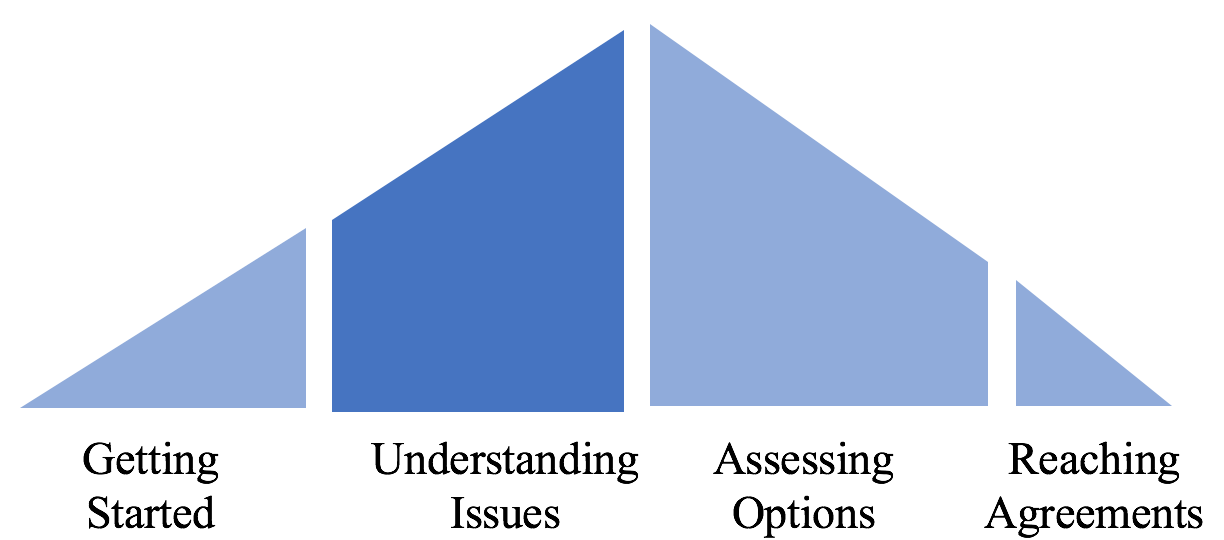
Once participants and facilitators have introduced themselves and the group has clearly defined the structure, goals and expectations for the process, it is time to move on to the substantive work of exploring avenues for reaching agreement. To begin this work, a group should identify the full range of issues — topics — that it must address. It must also build a shared understanding of the specific concerns, or interests that each participant has about these issues. Finally, the group can begin inventing options for addressing issues in ways that meet the participants’ interests.
This open, exploratory phase can make up the bulk of a collaborative process. Giving a group the time up-front to thoroughly understand issues and interests, and then develop a wide range of options, enables it to prioritize and eliminate options and develop final agreements in the later stages of the process.
This section covers a range of tasks and topics related to this phase of a collaborative process, including:
- Identifying Issues and Interests: Strategies for identifying both issues to address; and the stakeholder interests, the underlying needs that shape how participants approach the issues.
- Agendas and Sequencing: Techniques for structuring and ordering the issues so that the group can effectively and efficiently explore each one.
- Working Groups: Some of the process of exploring issues and developing options can be done in subgroups or break out sessions.
- Inventing Options for Dealing with Issues: Strategies for brainstorming a broad range of ideas that can become part of an eventual agreement.
- Facilitating Productive Conversations: Techniques for facilitators to use in keeping the group on track and working smoothly.
- Working with Scientific and Technical Information: Collaborative processes often must draw on a range of experts and integrate a large amount of complex information.